Choosing a deployment model
PingOne Privilege offers Endpoint Controller-based and No Endpoint Controller-based deployment models. Choosing the right model depends on your organization’s priorities for security, ease of deployment, and user experience.
Endpoint Controller-based model
The Endpoint Controller-based model is recommended for organizations requiring the highest level of device and user identity assurance. In this model, users install the Endpoint Controller on their device. The Endpoint Controller leverages the device’s Trusted Platform Module (TPM) to create a strong, hardware-backed identity.
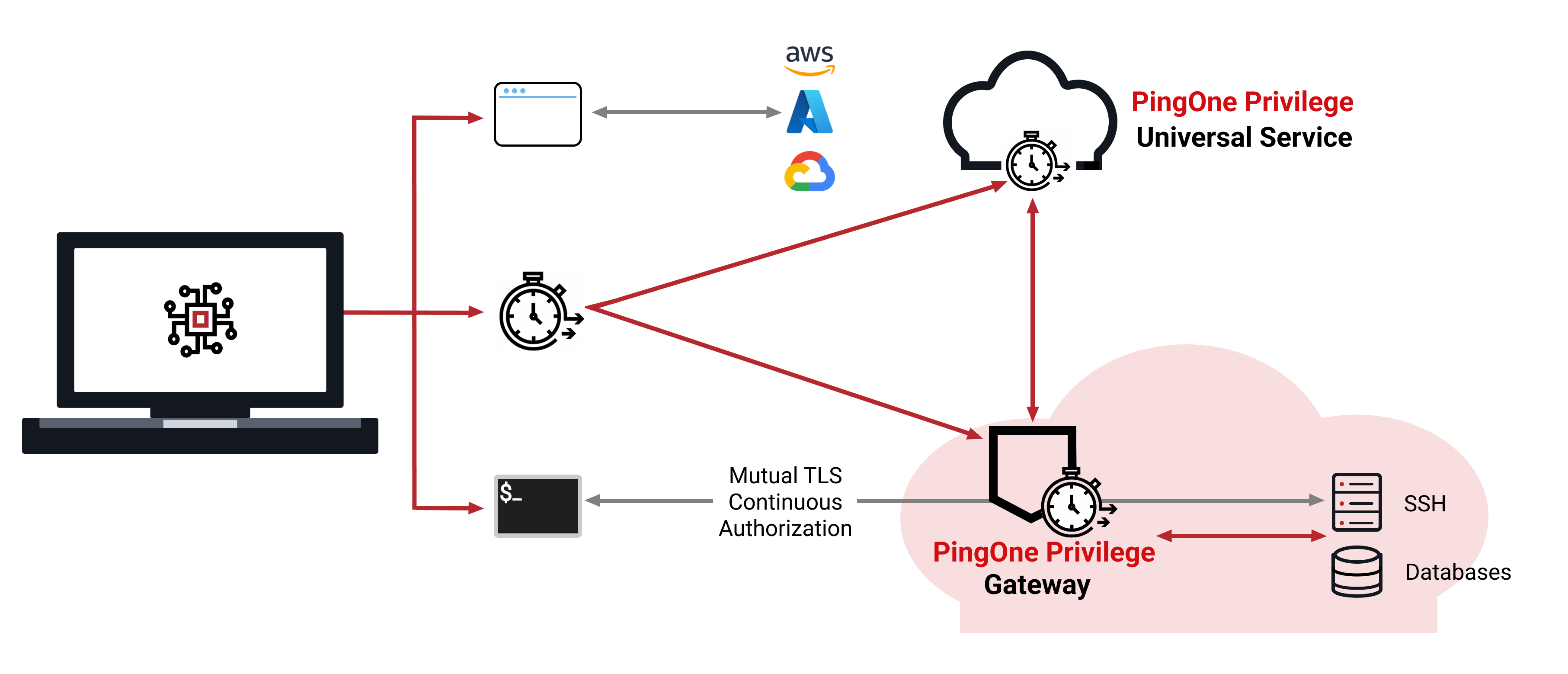
Key features of this model include:
-
Strong device and user identity verification.
-
Continuous authorization and session monitoring.
-
Enhanced security for sensitive environments.
No Endpoint Controller-based model
The No Endpoint Controller-based model is ideal for organizations seeking a fast, low-friction rollout, or for environments where the Endpoint Controller can’t be installed. Users access resources like Secure Shell (SSH), cloud CLIs, and Kubernetes using the No Endpoint Controller.
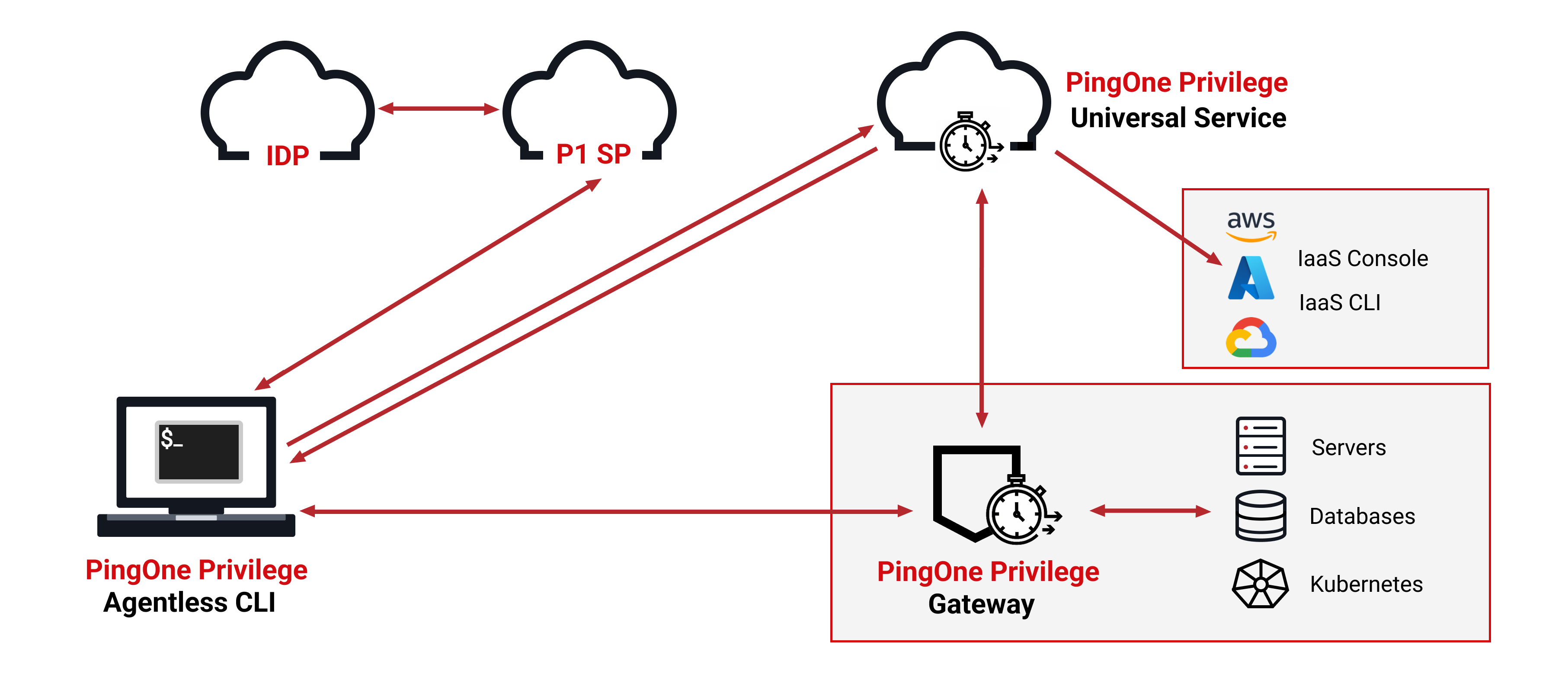
Key features of this model include:
-
Rapid deployment without the Endpoint Controller.
-
Flexibility for organizations with diverse device management policies.
-
A phased approach to privileged access management (PAM).
-
Some trade-offs in device identity assurance compared to the Endpoint Controller-based model.