What is Human Privilege?
Human Privilege secures access for the people in your organization, including administrators, developers, and workforce users reaching servers, databases, Kubernetes clusters, and cloud consoles and CLIs. It ensures secure just-in-time access through dynamic permissions, centralized policy enforcement, and strong device and user identity, helping organizations reduce risk and meet regulatory requirements.
PingOne Privilege also includes Agent Privilege, which secures access for AI agents acting on behalf of users. If you’re securing AI agent access to MCP servers and Git repositories, see What is Agent Privilege?
Core capabilities
PingOne Privilege provides the following core capabilities for effective privileged access management:
-
Centralized management of privileged access for cloud and on-premises resources
-
Just-in-time (JIT) access with temporary, auto-expiring credentials
-
Fine-grained policy enforcement and least-privilege access controls
-
Credential lifecycle automation and rotation
-
Strong device and user identity verification
-
Comprehensive audit logging and activity monitoring
-
Support for both human and workload (machine) identities
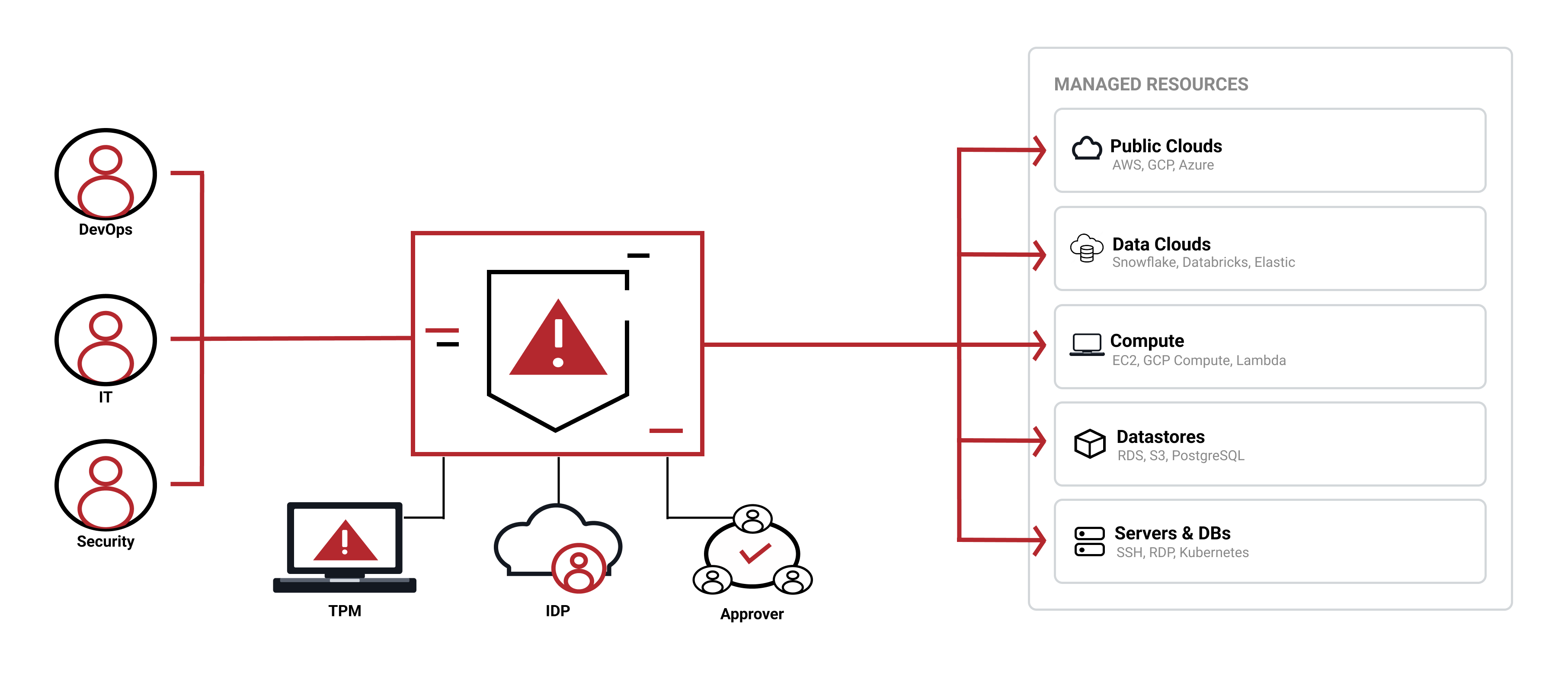
PAM before and after Human Privilege
| Assignment | Before Human Privilege | After Human Privilege |
|---|---|---|
AWS, GCP, and Azure roles |
Roles permanently assigned through identity provider. Administrators must manually manage role life cycles on an ad-hoc basis. Roles might have excessive permissions. Identities might inherit incorrect permissions. Access reviews take significant time. |
Automatic and manual JIT access. Least-privileged roles. Save time in access reviews. |
Custom roles, permissions, and policies |
Time-consuming to implement. Requires significant expertise. Requires continual maintenance. |
Automated. Leverages cloud native APIs. |
SSH, DB access controls |
Requires many static credentials that must be managed. Creating, rotating, revoking, and tracking credentials is expensive. Employees might share credentials, creating security risks. |
No static credentials. Passwordless solution. Access using native tools. |
Kubernetes cluster |
Complex systems of roles and permissions are difficult to manage. Lack of granular controls. |
JIT granular access control. |
Cloud CLI (AWS, GCP, Azure) |
Long-standing static credentials. |
JIT access with no static credentials and native tools. |
Approval process |
Policy construction and review are complex. Access reviews are time-consuming. IAM teams are backlogged with lots of tickets. |
Automated. Users don’t have to worry about cloud syntax for policy creation. Decentralized approval system. |